The traveling Yuyanapaq Photography Exhibit, produced by the Peruvian Truth and Reconciliation Commission, chronicles the political violence that ravaged Peru between 1980 and 2000. The photography exhibit, entitled “Yuyanapaq,” which means “To remember” in Quechua, chronicles the brutal conflict between the Shining Path insurgency and the Peruvian state, which left 69,000 dead in its wake, as well as the valiant efforts of ordinary Peruvians to resist violence and restore democracy to the country. This exhibit will be the backdrop for various events and speakers hosted by the Center for Global Studies and the Latin American Studies program at GMU and will be on display in the Mason Hall Atrium from October 31 to December 4, 2011.
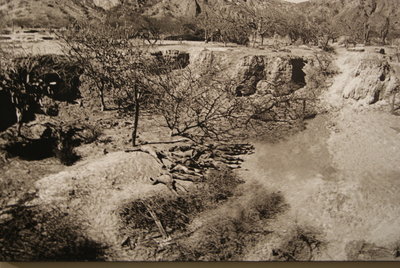
The bodies of 29 men and women found in Pucayacu, next to the Mantaro River. According to witnesses, they had been tortured and executed by a group led by Lieutenant Commander Alvaro Artaz, the head of the Anti-Subversion Navy Base that operated in the Municipal Stadium in Huanta. He was nicknamed “Commander Truck.” Artaz appeared to have ordered that 50 prisoners be taken away from the base and executed just before an inspection by the Attorney General, Alvaro Rey de UchuraccayCastro, who was investigating the disappearance of the journalist Jaime Ayala.
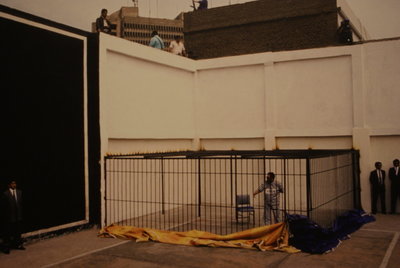
Twelve days after his capture, Abimael Guzmán – the highest leader of Shining Path – makes a speech and sings the Communist International anthem at the headquarters of the National Anti-Terrorism Bureau (DINCOTE), before a large audience of national and foreignjournalists.
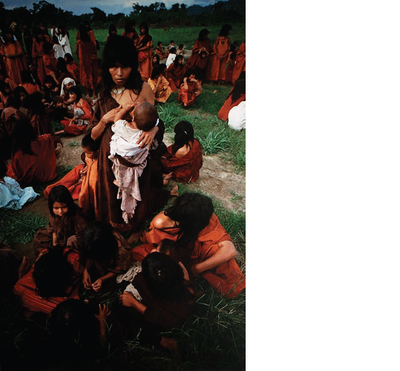
Asháninka women and children freed from a Senderista camp through the "Ene Operation" wait for food donated by the government.
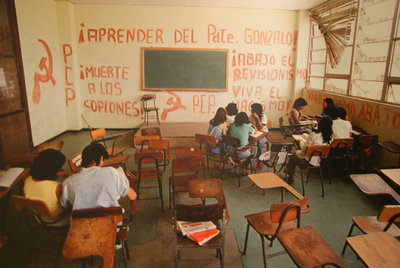
The Shining Path had a presence in public universities before the beginning of the armed conflict. In the mid-1980s the state began sending the police to intervene. In May 1991, the presence of the military in universities was authorized. Military bases were set up in San Marcos, La Cantuta, la Universidad Nacional José Faustino Sánchez Carrión, la Agraria de la Selva de Huanuco, and la Universidad Nacional del Centro en Huancayo. The photo shows San Marcos students in a humanities classroom full of Shining Path graffiti.
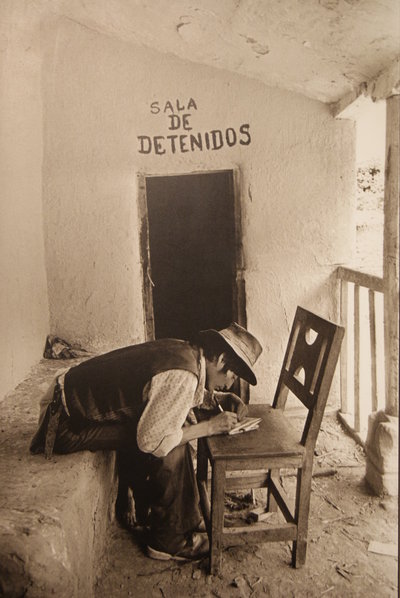
An Ayacucho peasant accused of ties to members of the Shining Path fills out forms in a detention room.
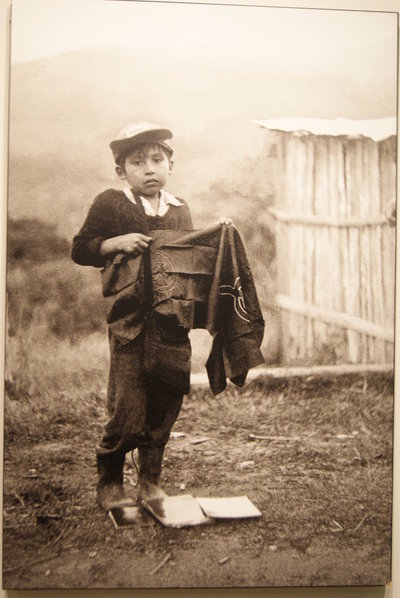
"Fausto," an 8-year-old boy, captured by the "ronderos" or community patrols of Ccahuasana, in the Ayacucho jungle. When he was five years old, he was induced by the rebels to serve as a messenger for the Shining Path guerrillas.
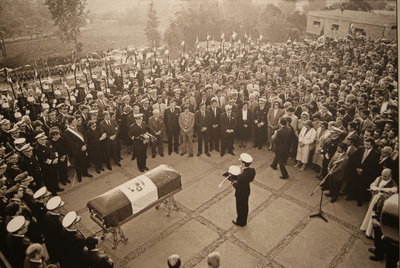
The funeral of Vice-Admiral Gerónimo Cafferata, President of the Banco Industrial, killed by the Shining Path on October 14, 1986. This execution was apparently in retaliation for the repression overseen by the Navy of the uprising by members of the Shining Path at the Frontón penal island.
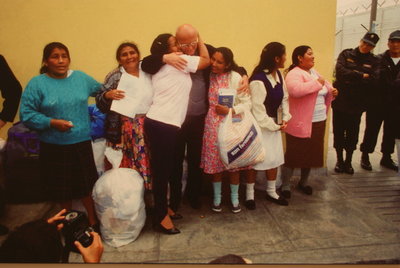
A group of women unjustly accused of terrorism, detained in the Chorrillos prison and subsequently released thanks to the work of the Ad-Hoc Commission, surround the former president of that working group, Belgian priest Hubert Lanssiers.
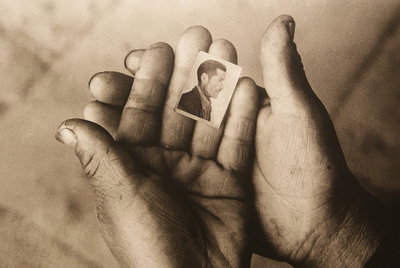
A woman shows the photo ID of a relative who disappeared in Ayacucho.
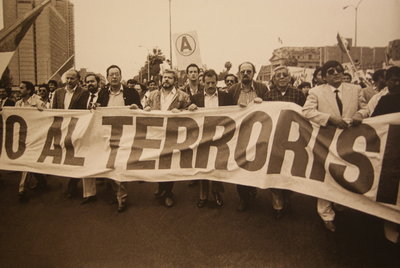
March for Peace defying an "armed strike" by the Shining Path.
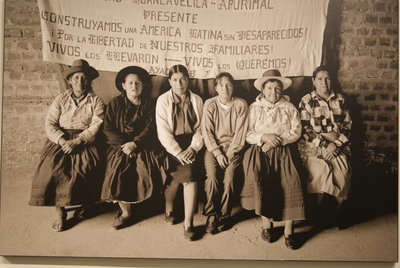
Angelica Mendoza, also known as mother Angelica, appears next to other relatives of missing persons on the premises of the National Association of Kidnapped, Detained and Disappeared Relatives (ANFASEP). This association was founded on September 2nd, 1983 by Angelica, after her son disappeared in Ayacucho.
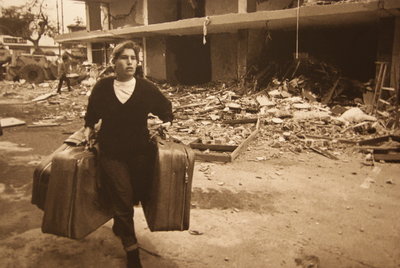
A woman moves her belongings to a safe place after the Shining Path bomb attack in the calle Tarata, Miraflores, in the residential and commercial heart of Lima. Twenty five people died and several residential buildings were destroyed.

Clandestine press conference by the MRTA (Movimiento Revolucionario Tupac Amaru) for the national and international media. The rebels announced a ceasefire in their military efforts against the government of Alan García. Journalists were taken to the meeting blindfolded.
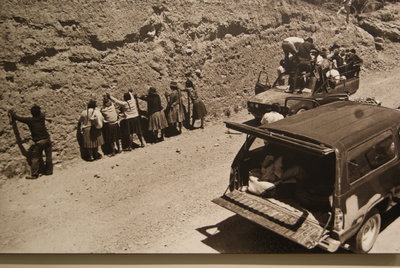
In response to a series of dynamite attacks by the Shining Path in Ayacucho, the police combed the area (batidas), stopping and often apprehending men, women, and children.

Shining Path suspects transferred from Ayacucho after the attack on the Huamanga jail in March 1982 are escorted to the reopened penal island of El Frontón off Lima’s coast.
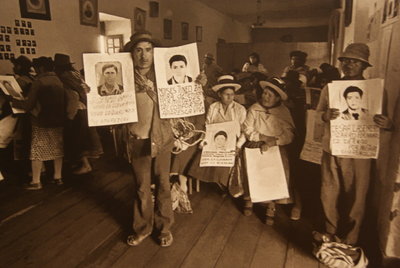
Relatives of the disappeared gather in the Municipal Council in Huamanga to testify before the European Commission on Human Rights, which had set up an office in order to gather allegations from the victims of the conflict.
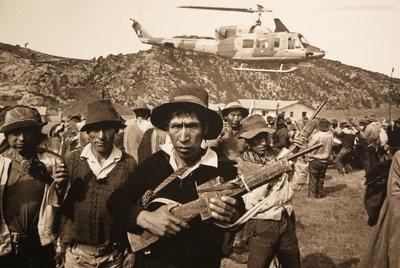
After the Chuppac massacre by Shining Path guerrillas on April 8th, 1990, the community organizes itself into "rondas campesinas," or civil defense patrols to guard themselves with the help of the Army.